Showing posts with label photography tips. Show all posts

Friday, August 21, 2015

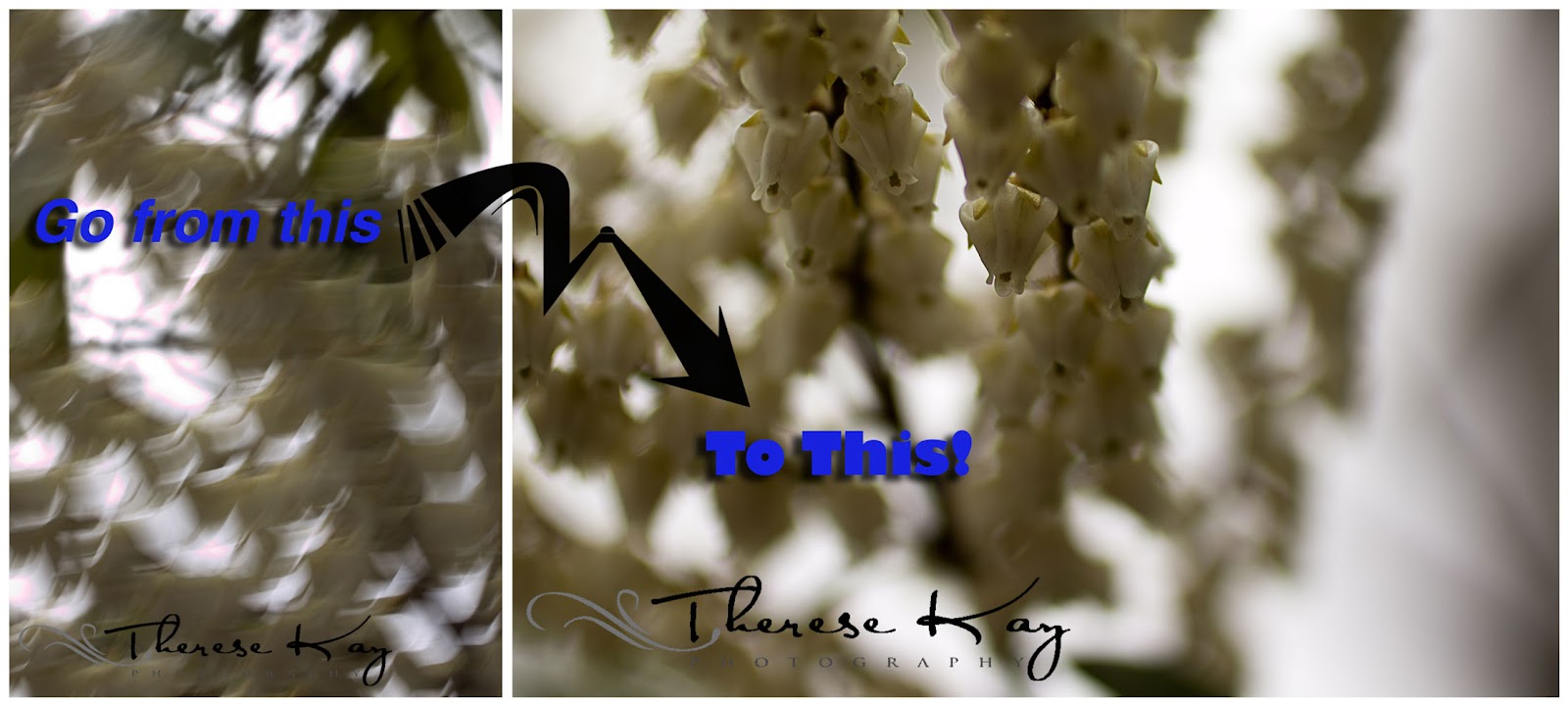
Reducing Camera Shake, AKA: Holding Your Camera Steady

There are times when your camera (if in auto mode) will decide to use a slower shutter speed - usually low-light situations.  There are also times when the shutter speed your camera chooses isn’t fast enough to freeze the action in front of you or slow enough to capture a sense of motion.
Avoid-Camera-Shake.jpg
Today I’ll address holding your camera steady to avoid or minimize camera shake.  There are multiple ways of doing this - hand-held with proper body posture, hand-held with help of a physical support, hands-free physical support, and use of a tripod or monopod.

Friday, July 31, 2015

Photo Friday: Capturing Love

Almost any time you photograph two or more related, (or soon to be related!) human beings together, you are photographing love.  Parent/child, siblings, families, couples, weddings….  It is the relationship, the love, between the people that you are trying to capture.

Friday, April 10, 2015

Photo Friday: What's Wrong With This Picture?

An essential element to improving your photography is knowing what's wrong with the images you take and learning how to fix them.

Friday, March 13, 2015

Photo Friday: Spring Photos


The thermometer is very slowly rising and the snowbanks are very slowly shrinking.  According to the calendar, spring is less than two weeks away!  After this long winter, I’m sure we are all eager for the warm weather, and all that comes with it, including spring images of new life and family!

My Favorite Spring Images

You would think that being the family-oriented person I am that my favorite spring images would center around all the holidays in the spring.  But I am just so drawn to the new life budding out of the ground.  If you looked at my files of images you would see April and May overflowing with thousands of images of spring flowers and budding trees.

Wednesday, February 8, 2012

What's in YOUR Camera Bag?

Hopefully, there's a camera in there.  Did I ever tell you about the time I grabbed my camera bag in a rush without checking and arrived at a photo shoot without my camera?  No?  Well, let's just say, ALWAYS CHECK YOUR CAMERA BAG!!!

OK, back to the camera bag.  My camera happens to be a Canon EOS 60D - which I happen to love and am still learning to use.  I got this after my trusty Canon EOS Rebel malfunctioned at a wedding.  I still have it and plan on having it serviced to use as my back up camera.  In the meantime, I decided to upgrade and use my 0% financing for 18 months!

Saturday, October 29, 2011

Maneuverability

I think I just made up a new word.  But, that's OK, right? (Actually, now that I've run spell check, apparently it's a real word.  Who knew?)  You might be wondering what I mean and what I'm trying to say.  Here goes.

After an appointment in Arlington the other day, I decided to wander about with my camera for a bit.  Some exercise, fresh air, and a new area to explore - what could be more pleasant?  Mass Ave in the middle of the day can be rather uninspiring photography-wise, but that didn't stop me from trying.  A few flowers, a store front, and a church steeple were all candidates for the lens.  Nothing very spectacular, but sometimes the joy is in the hunt.

So, crossing one of the streets, there was a little island in the middle.  And in the island was planted a rose bush. And, as can be predicted, on that rose bush were some roses.  So, of course I stopped on the island to snap a few.  Here's one.


The background is kind of busy.  The bloom is nice and the lighting, but the rest of the picture ruins it.  And, since this was my point-and-shoot, I didn't have all the options of zooming and such at this distance.  It wasn't what I wanted.

So, I tried another.  

Again, uninspiring.  It's a flower.  Whoop-di-doo.  Yes, it's pretty and closer and there's a less distracting background, but it's still not what I was looking for.  What attracted me to stop, wasn't simply the roses, but the back-lighting of the roses.

So, I kept trying.  Which attracted a few stares from drivers passing by.  I mean, here I was ducking and crouching in the middle of a rose bush trying to get the point of view I wanted.  I'm sure it was a sight to see!  So, here is the result, also not entirely what I was going for, but much closer.  I gave up after this one because I had thorns up my butt.


I would have liked to not have the buildings in the image.  That might have required moving a telephone pole and crouching down even a little lower into the thorns.  I was already getting enough stares as it was, so I kinda gave up.

So, what does this have to do with maneuverability?  Well, sometimes it takes work to see something from a particular point of view. And we can't always see it until we step outside of our comfort zone.  Sometimes you have to be willing to be started at, move obstacles, and get thorns up your butt to see something from a particular point of view.  Often times, it's worth the trouble.  

So, next time you find yourself in an uninspiring situation, try maneuverability.  Change your perspective.  You never know, the results can be transforming.

Wednesday, February 16, 2011

Transitions


They can be tough!  I have just transitioned from unemployment to full time employment with an hour and a half commute on either end.  So, am I excused from my long absence? 

Transitions can be hard to adjust to in life, but they can also be hard to adjust to in a photograph.  In a high contrast image, it can be difficult to balance the brights and the darks to avoid over or under exposure of parts of your image. (I could really riff here on the many analogies to life, but really, I'll try to resist...)  This is where filters or burning and dodging comes in. 

Filters are used at the time of capture to control the amount of light that enters the lens to create the image.  This could be done with a half neutral density filter which can help tone down a bright sky while allowing a darker foreground or landscape to get properly exposed.  This can be duplicated in the digital darkroom to some exent.

Burning and dodging is a type of post-processing applied after the image has been captured.  It's a traditional dark room technique used to reduce or increase the amount of light exposure to portions of a photograph.  This can be duplicated somewhat in a digital darkroom as well.

OK, OK, I can't resist the siren call of a good analogy.  I tried, but it's like trying to resist eating more chocolates from my Valentine's Day box - virtually impossible!

Just as a picture can be black, white, and every shade of grey in between, so can life.  Rarely do we want to stop the over-exposure of those bright moments (unless we suffer from manic episodes), but we often want to brighten up those dark moments.  This can be done with a filter - something we look through to see the world - or in the "darkroom" - a place where we process what we see and shape it into what we want to see, what is appealing to our experience of the world.

Both require work, but used well, can greatly enhance our experience of life.

Wednesday, January 5, 2011

Adrift

Ever feel like a rudderless ship?  Just kind of floating along with no real purpose?  No direction?  I've been feeling like that the past few days.  Kind of post-Holiday blues combined with unemployment.  Sigh.

I know things will change and I know I have a purpose.  It's just coping in the meantime.


Sometimes when you look at a photograph you might feel adrift. 

There's so much to look at and to absorb.  You don't know where to look first and so, you look away. 

When you don't know where to focus your attention, you lose interest like in the picture here.  What is the subject?  Where am I supposed to look?  What was the point of the picture?  You feel adrift, slightly overwhelmed by all the information.  So, you look away at something else.


But, then you focus in on another photograph and it captures your attention and keeps it.  You know what you are looking at and the message is clear.  Now, the following image isn't technically great.  In fact, it's technically kinda bad, but it illustrates the point.  (Please no comments about the amount of food on my plate!  It was Thanksgiving!!) 

I know what to look at in this image.  I know what the subject is.  I'm not overwhelmed.  There's even a "frame" around the subject - the plate - that keeps me focused on the food.

Apply that to life now.  If you're feeling overwhelmed and adrift, pick one thing.  Focus in.  Know what you are looking at.  Define it.  And for a while, if need be, filter out all the rest.  Calm yourself, center yourself, let the subject anchor you.

Monday, November 22, 2010

A Few Tips for Better Holiday Photos

We're entering the time of year when there is an overload (pleasantly so!) of events with family and friends.  You'll want to capture those special memories and times.  Life is so unpredictable and memories are great.

Here are a few guidelines that help me make the most of the picture-taking opportunities.  I hope they will help you, too.
  1. Make sure your batteries are charged and ready and BRING YOUR CAMERA WITH YOU!!!  If you don't have your camera or the batteries are dead or the memory card is full, you'll be sad to miss the opportunity to take a picture.
  2. Be sensitive to people's desire to be in a picture or not.  But don't be afraid to gently remind the person that the purpose of your taking the picture is so that you can remember them and their participation in your life.
  3. Don't let taking pictures take the place of good conversation and actual participation in the event.  It's us avid shutterbugs that enter this mode sometimes.  It's OK to put the camera down and MAKE the memories instead of just capturing them.
  4. In addition to capturing the people, take pictures of the details.  What did the table setting look like?  What about the meal?  Decorations?
  5. Is there a special tradition in your family?  Try to capture it!
  6. Keep it simple.  Make sure you fill the frame with your subject.
  7. Check the background and four corners of your frame.  Make sure to include what you want to include and exclude what you don't want to include.
  8. Don't be afraid to move the wrapping paper, glass, messy plate, or whatever before you trip the shutter.  Try to minimize with what is competing with your main subject.
  9. Soften the flash with a bit of tissue or tissue paper over the flash.  This will cut down on glare, harsh shadows, and red eye and soften the lighting.
  10. Smile!  If you smile when you are taking the pictures, your subject is likely to smile back!


This image of my lovely niece is simple yet effective.  The elements that make it work: 
  • It's simple.  The viewer knows what I was taking a picture of.
  • I have her eye contact.
  • The background is not distracting, but definitely places it at Christmas.
  • The frame is full with no distractions.
  • The off-center composition adds to the interest.
More important than all of these tips is to enjoy and treasure those special times!

Friday, November 12, 2010

Keeping It Simple

Ah, simplicity.  The very idea makes me sigh with relief.  Too much to look at turns into too much to think about, too much work to focus on.  And if it's your house, too much to clean!

As I'm preparing for a major life transition, I find myself needing to clean out, rearrange, reorganize, and yes, simplify.  Not an easy task.

I find myself thinking and evaluating everything:
But so and so gave that to me... 
But I bought that in a special place.. 
But that brings back special memories...
But I don't know how to store that properly... 
I don't know how to organize those in a way that makes sense...

It's quite a lot of work.  Hard work.  Mental work.  Even emotional work.  It's hard to let go.  But as I look around my living room and start to see open space with less on the walls and shelves, I find myself breathing a little easier.  I feel the sigh of relief growing and that's what keeps me going.

A complex photograph can be a beautiful thing, but so can a simple one.  What are the important elements to the photograph?  Eliminate everything else.  Allow the viewer to easily focus in on your vision.  Let them absorb the subject, appreciate the lighting, the shape, the colors.  Allow them the luxury of not having to choose what to look at but to simply look and enjoy.

Monday, November 1, 2010

The Devil Is in The Details

I was going to try and write this and post this yesterday in honor of Halloween.  Now I suppose it's in honor of All Saint's Day and having the word "devil" in the title seems sacrilege.  However, in this case, or really in any case, the devil isn't nice!  He lurks and hides in places we can't immediately see and tries to sabotage our best efforts.  This is the struggle of all saints... trying to find the devil in the details.

For my last day job, I had to write a lot of reports.  And the devil was certainly in the details of getting all the numbers and demographic data correct.  Let's just say there were a couple of rewrites and I learned how to manage the information better each time around. 

The same thing applies to photography.  Yes, you knew the photography thing was coming.  Isn't that the point of this blog?  You've got to pay attention to the details.  When you don't disaster strikes.  When you do, nobody notices.  There are a million examples.  What's that spot on her face?  Oh, a crumb?  How did I not notice that?  Is that a milk moustache?  What's that in the background of my "nature story"?  A One Way sign?  Oops.  Wait.  What happened to the groom's hand?  Not in the frame.  Shoot.  Is that a bra strap?

Often when everything is right, no one notices.  They just think: good picture. Sometimes when it's all right, it's magic.  I've seen a photo go from nice to Wow! with a simple shift in the direction of the eyeball.  Not a thing was different other than suddenly making direct eye contact with the camera.  This is especially true with children.  I worked with one little girl who would totally smile and turn her head towards the camera and be watching something else entirely.  Shot after shot of "look at me"  "look at the camera"  "Can you see my eyeball?"  I wasn't nearly as interesting as everything else in her world.

So much of photography comes down to being in the moment.  REALLY in the moment.  If you slip out of the moment, you don't catch the fact that the bride just blinked, or that the little girl looked away, or that there is a sign in the background or whatever.  And the shot isn't as good as it could be if you had been really present and really looked at every detail.  (Or worse, the shot is ruined.)  Check the edges of the frame.  Look at the subject(s).  Look behind the subject(s).  Does it all work?  Is everything there?  Is anything missing?  Is anything there that shouldn't be?  Take a breathe and focus.  And go for the magic.


Just a quick note on this.  This is the second image.  Why?  The first one looked like he was trying to roast a marshmallow on the end of his magic wand....

Wednesday, October 6, 2010

The Best Camera

So, you read the title of this post and you think I'm going to tell you about the best camera to own or buy or the best camera I ever owned. 

But I'm not.  I'm going to tell you about a book.

Wandering through the Salem Public Library today, one of my favorite haunts, I came upon a book.  The title of the book made me pick it up.  Flipping through the book made me check it out.  What's the book?  "The Best Camera Is the One That's with You" by Chase Jarvis.  It happens to be specifically iPhone photography, but that's besides the point.  I don't have an iPhone.  I do have a camera phone, though.

What made me pick this book up was the very post that I wrote yesterday, Moments Such as These, when I talked about being in the moment and maxing it out.  Photography is less about what equipment you are using and more about what you see and choose to capture.  Whatever camera you have (unless it's physically broken) is capable of taking good pictures. 

Look.  Notice.  See.  Learn the quirks of your camera and the limitations and use them to your advantage.  Work with what you have and max it out.  Don't let what you don't have be a barrier to going out there and just doing it.  Experiment.  Cover the lens with saran wrap.  Turn the flash on.  Turn it off.  Keep the camera super steady.  Purposely move the camera.  See what happens, but don't stop.

So, if you're hanging out at the library, or the bookstore, pick up this book and flip through its pages.  Get inspired by what a camera phone (in this case the iPhone) can do.  Check out pinhole photography -  can't get any simpler.  Search the internet for point and shoot photos, toy camera photos, camera phone photos, and know that it's not the equipment that limits you - unless you let it.


Broaden your horizons.  Spread your wings.  Experiment a little.  Change your perspective.  You might just like what you get!  And, it goes without saying - this applies to life too.  Just had to point out the obvious there...